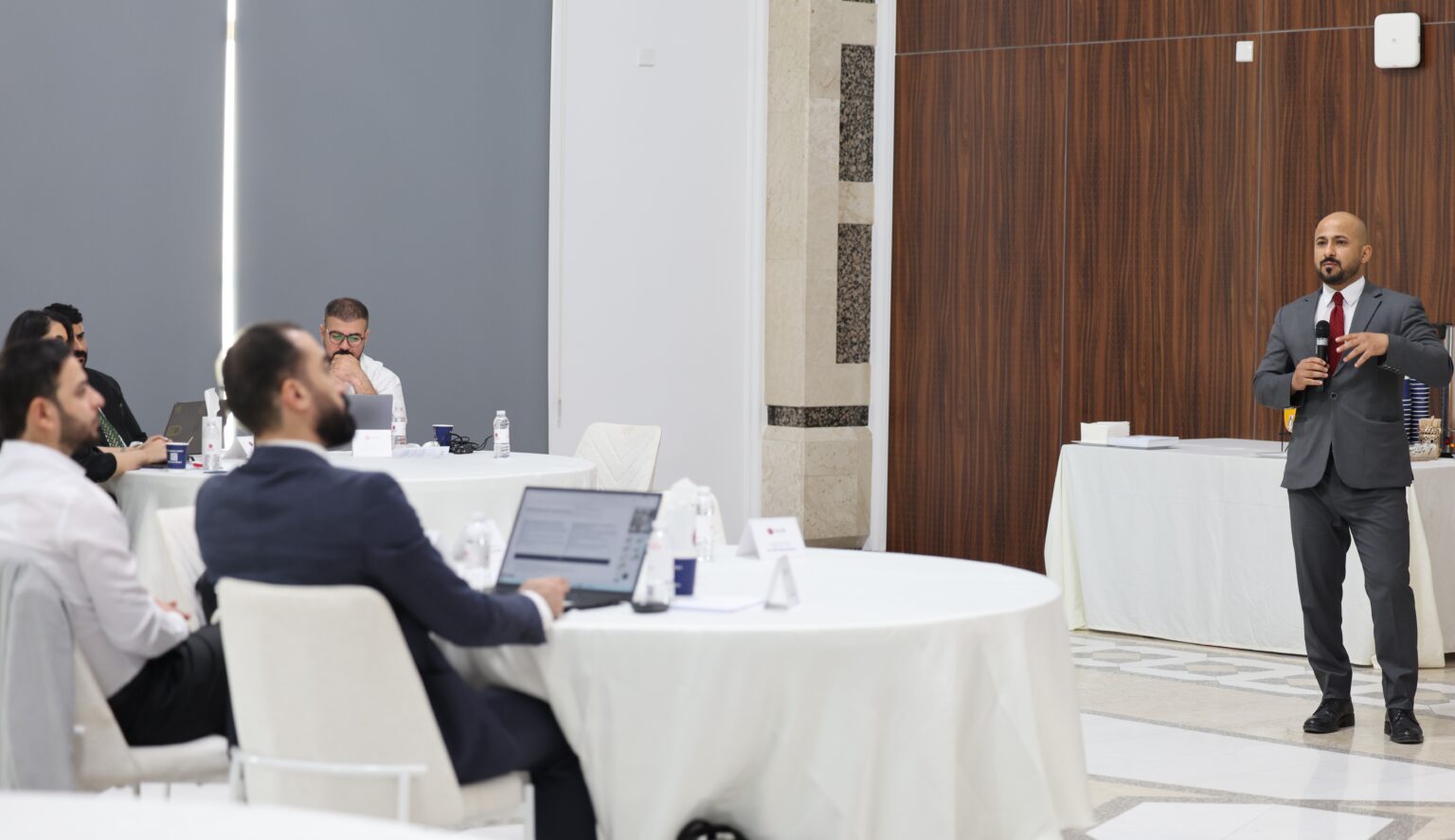
In partnership with the International Water Management Institute, Al-Mustansiriyah University, and UN-HABITAT, the American University of Iraq- Baghdad (AUIB) launched “Wiqaya Project” in Iraq_ funded by UK International Development_ by organizing an Onboarding Workshop that brought together researchers and representatives of the partner institutions involved in the project dedicated to the “mitigation of sand and dust storm generation and impacts in southern Iraq and the Gulf region”.
Iraq is one of the countries most affected by declining water supply and climate change. Over the past years, this was amply manifest in the increasingly frequent sand and dust storms, especially in the country’s south. According to the Institute, the Project’s leading partner, this is due to climate change, desertification, poor land and water management, and “conflict”, where these storms are causing severe health risks, agricultural losses, forced migration, and social tensions, with a reported 130,000+ “climate-displaced” people.
“We are an essential part of the ‘Wiqaya Project’, which consists of three components: the first is concerned with modeling and simulating the impacts of dust storms and sandstorms that affect various regions of Iraq, particularly the south and the center, affecting urban settlements in those areas, as these storms cause climatic, environmental, and social changes, and lead to desertification,” said Dr. Abbas Al-Zubaidi, Head of the Department of Radiology at AUIB’s College of Health Sciences. He explained that the university’s primary responsibility within the project’s framework is “to build a digital decision-making system based on artificial intelligence technologies, in collaboration with researchers from various Iraqi universities, such as Al-Mustansiriyah University, as well as universities in the wider region, such as Qatar University.” Dr. Al-Zubaidi continued, explaining that these researchers “generate simulation models of these (climatic) effects, especially the dust storms, of which we have witnessed a significant increase in number in recent years, with the possibility of (the phenomenon continuing) in the coming years. Therefore, the project is part of a larger integrated national project to study these storms and their impact on desertification levels in Iraqi urban areas. Our mission, and the mission and message of the American University of Iraq- Baghdad, is to support national as well as international efforts to combat the phenomenon of desertification, using advanced technologies such as artificial intelligence techniques and precise digital simulation systems.”
The research partner working on the same first component of the “Wiqaya Project” in Iraq, Professor Aqeel Ghazi Matar, of the Department of Atmospheric Sciences at the College of Sciences at Al-Mustansiriyah University, explained that “our primary task as a team is to create simulations and models of expected scenarios in the event of changes in soil characteristics and wind patterns in the target region. If we modify these scenarios based on the materials available there, or on nature-based solutions and the support of local populations, we can then provide ideas that the second component of the project—the executive component—can build upon. Thus, we would have a strategy or several scenarios, each with expected outcomes and estimated costs and challenges, thereby equipping the decision-maker with the ability to choose the easiest and most beneficial path.”