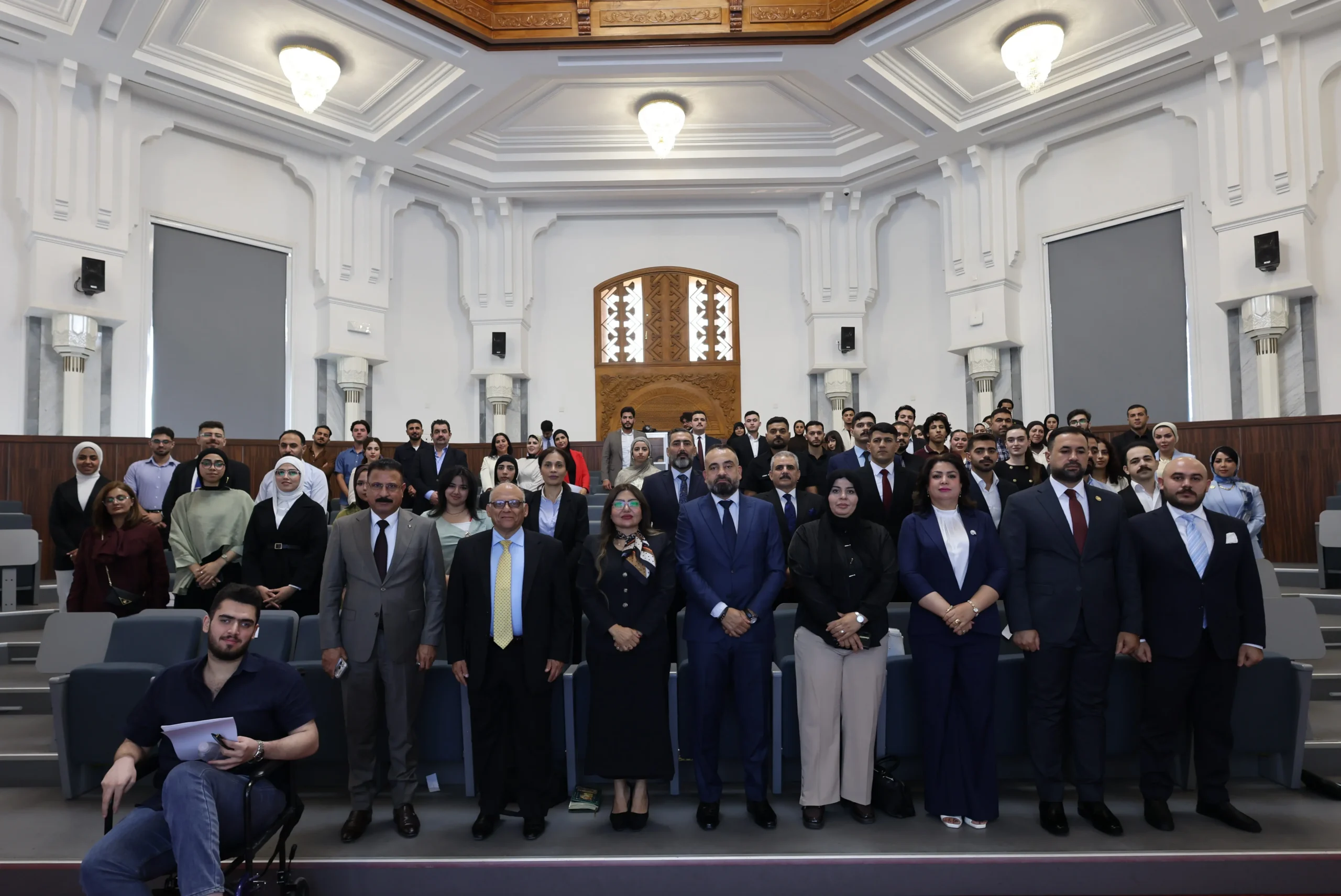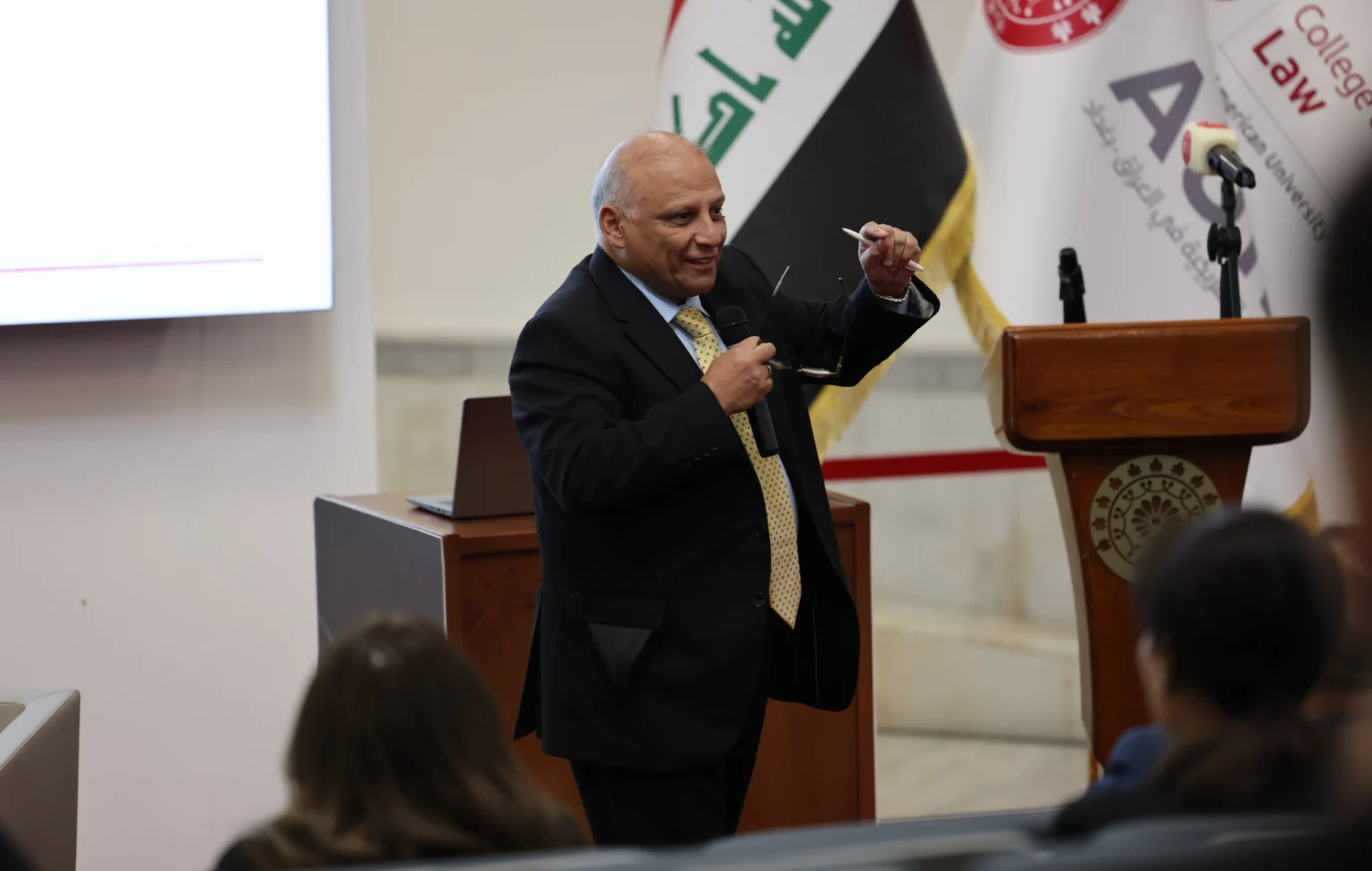
In collaboration with the Institute for International Law and Human Rights (IILHR), the College of Law at the American University of Iraq-Baghdad (AUIB) organized a short summer course on “Environmental Law, Governance and Leadership: Protecting People and the Environment in Iraq”. Students of law at AUIB and at the University of Mashreq, practitioners of law, environmental activists, and other interested parties attended the three-day course that was “designed as a progression from understanding to application to leadership,” as per the Dean of AUIB’s College of Law, Dr. Khansaa Mohammad Jassim. A delegation from the Office of the President of the Republic of Iraq attended the opening session of the academic program and conveyed the Presidency’s support for the efforts on part of AUIB and IILHR.
Addressing Iraq’s environmental challenges has become a public policy priority that requires collaboration on part of “lawyers, policymakers, judges, legislators, civil society, and future leaders who understand how legal frameworks can protect both people and the environment,” maintain the summer course’s organizers. Therefore, legal education must not be limited to college halls and the learning of theory, but should rather include practical application in the context of addressing present challenges that society faces in reality, said Dr. Khansaa Mohammad Jassim at the program’s opening session, describing the program as “a space for learning and questioning,” affording “a broader legal viewpoint,” thus contributing to building Iraqi society and its public and private institutions.
IILHR’s Executive Director, Ms. Robin Gary, cited her organization’s long experience in working in Iraq, beginning in the year 2005 with collaboration with Iraq’s post-war parliament. Reflecting on that experience focused on human rights issues, “especially environmental rights,” she spoke on “law as a tool for change,” as she sought to explore and identify the issues that drive individual participants in the course to engage in environmental activism.
Discussions at the opening session highlighted a common theme among many participants: the need for implementing existing environmental legislation first, and for cooperation between governmental agencies on one hand and the general public and specialized associations on the other, for that purpose.