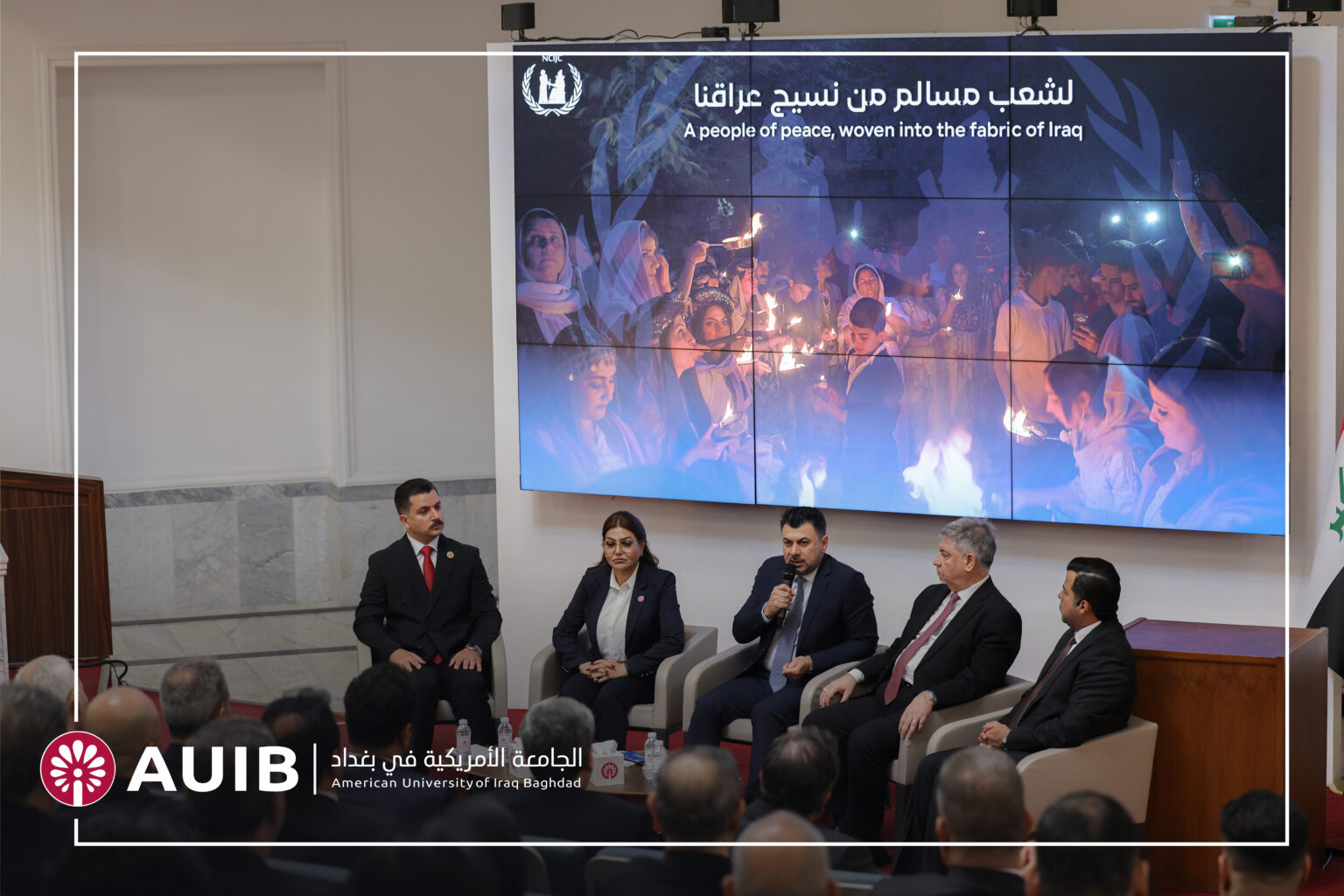
In cooperation with the Supreme Judicial Council and the National Center for International Judicial Cooperation, the College of Law at the American University of Iraq-Baghdad (AUIB) co-organized a seminar on the occasion of the Eleventh Anniversary of the Genocide Against the Yazidi Community, attended by a host of judicial leaders, experts, diplomats, media figures, and members of civil society organizations, and most notably the President of the Supreme Judicial Council, Dr. Faiq Zaidan, who sponsored the event and delivered a speech in the opening session.
AUIB President, Dr. Bradley Cook, welcomed to campus the distinguished guests and affirmed the university’s solidarity with “Yazidi brothers and sisters” and its “commitment to dialogue and learning,” serving as a platform for conversations on such important subjects, thus helping to shape today’s students into tomorrow’s leaders. Education goes beyond classroom instruction; it is also about conditioning students to think critically and act constructively upon their reasoning, added President Cook, recognizing “the importance of remembering even painful events” in the process of building a better future. He saw that the story of the Yazidi community is one of resilience_ a powerful example for students to contemplate and be inspired by, driving home the idea that “hope and renewal are possible,” thereby fostering a “national commitment to healing.”
The genocide against the Yazidi community is “a deep wound in the heart of our nation,” said President Zaidan, recalling the mass killings, forced displacement and disappearances, as well as violations of personal dignity suffered by the Yazidi community. President Zaidan recognized the survivors who still bear the marks of the tragedy, and affirmed the Supreme Judicial Council’s unwavering commitment to enforcing justice and holding perpetrators accountable, noting the role of the National Center for International Judicial Cooperation in archiving_ in accordance with precise standards_ evidence of genocide and various crimes committed by the terrorist organization “ISIS” against the Yazidis. He described this effort on part of the Center as exceptional, aiming to preserve rights, hold perpetrators accountable, keep the memory of the crime alive, and, most importantly, pursue the criminals “wherever they may be,” in a bid to prevent such crimes from happening again in the future.